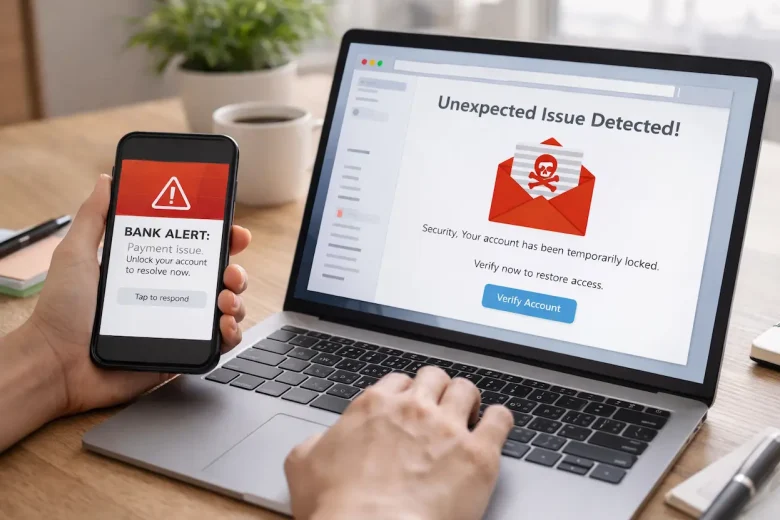
Online scams have become a part of everyday digital life, whether we notice them or not. From suspicious emails to fake websites and misleading messages on social media, scammers are constantly finding new ways to trick people into sharing personal information or money. I’ve seen people lose access to accounts, fall for fake offers, or unknowingly share sensitive details simply because a message looked legitimate at first glance.
What makes online scams particularly dangerous is how convincing they can be. Scammers often imitate trusted companies, use familiar logos, and create a sense of urgency to pressure people into acting quickly without thinking. The goal is almost always the same—gain access to your data, finances, or accounts.
The good news is that most online scams follow patterns. Once you understand how they work, you can recognize warning signs early and avoid falling victim. In this guide, we’ll explore common types of online scams, how they operate, and practical ways to protect yourself in everyday situations.
Understanding How Online Scams Work
Exploiting Trust and Urgency
Scammers rely heavily on psychological tactics. They often pretend to be from trusted institutions like banks, delivery services, or well-known companies. By creating urgency—such as “your account will be suspended” or “act now to claim a reward”—they push people to react quickly without verifying the message.
Impersonation of Legitimate Entities
Many scams involve impersonating real organizations. This can include fake emails that look like they come from companies such as PayPal or messaging platforms like WhatsApp. The design, logos, and tone are often copied closely to appear authentic.
Social Engineering Techniques
Social engineering refers to manipulating people rather than systems. Instead of hacking software, scammers trick individuals into voluntarily giving away information such as passwords, OTPs, or banking details.
Common Types of Online Scams
Phishing Emails
Phishing emails are one of the most widespread scams. These emails often appear to come from trusted sources and include links that lead to fake websites designed to steal login credentials.
- They may claim account issues
- Ask you to verify personal details
- Include links that look legitimate but redirect elsewhere
Always double-check the sender’s address and avoid clicking suspicious links.
Fake Websites
Scammers create websites that look identical to real ones. For example, a fake banking login page may mimic a legitimate site to capture usernames and passwords.
- URLs may have slight spelling differences
- Pages may look visually identical to real platforms
- Forms may request sensitive data
Always verify the website URL before entering any information.
Online Shopping Scams
Fake online stores offer products at unusually low prices to attract buyers. After payment, the product is never delivered.
- Often advertised on social media
- Require upfront payment
- Lack clear contact or return policies
Be cautious of deals that seem too good to be true.
Tech Support Scams
In these scams, fraudsters pose as technical support representatives claiming your device is infected or compromised.
- They may ask you to install remote access software
- Request payment for “fixing” non-existent issues
- Use alarming messages to create panic
Legitimate companies do not contact users unexpectedly for support.
Social Media Scams
Social platforms are frequently used to spread scams through fake giveaways, impersonation accounts, and fraudulent promotions.
- Fake profiles pretending to be celebrities or brands
- Messages claiming you’ve won a prize
- Requests for personal information or payment
Always verify accounts and avoid sharing sensitive data through direct messages.
Investment and Crypto Scams
Scammers promise high returns with little or no risk, often related to investments or cryptocurrency.
- Guaranteed profit claims
- Pressure to invest quickly
- Requests to transfer funds to unknown accounts
Legitimate investments always involve risk and transparency.
Job Offer Scams
Fake job offers are designed to collect personal details or upfront fees.
- Requests for payment to secure a job
- Unverified company details
- Offers that seem too easy or high-paying
Always research the company before sharing personal information.
Step-by-Step Guide to Avoid Online Scams
1. Verify the Source
Before responding to any message or email:
- Check the sender’s email address carefully
- Look for inconsistencies in spelling or domain names
- Visit the official website directly instead of clicking links
Verification is your first line of defense.
2. Avoid Clicking Suspicious Links
Never click on links from unknown or unexpected messages.
- Hover over links to preview the URL
- Avoid shortened links if the source is unclear
- Manually type website addresses when needed
This helps prevent redirecting to fake websites.
3. Use Strong and Unique Passwords
- Avoid using the same password across multiple accounts
- Create passwords with a mix of characters
- Update passwords regularly
Strong passwords reduce the risk of unauthorized access.
4. Enable Two-Factor Authentication
Two-factor authentication (2FA) adds an extra layer of security. Even if someone gets your password, they still need a second verification step.
- Use authentication apps or SMS codes
- Enable 2FA on important accounts like email and banking
5. Be Careful with Personal Information
Avoid sharing sensitive details online unless absolutely necessary.
- Do not share passwords or OTPs
- Limit personal data on public profiles
- Be cautious about what you post on social media
6. Keep Software Updated
Updates often include security improvements.
- Update your operating system regularly
- Keep apps and browsers up-to-date.
- Enable automatic updates if possible
7. Use Trusted Security Tools
Basic security tools can help detect threats.
- Use built-in antivirus or security features
- Keep firewall enabled
- Scan your system periodically
8. Check Website Security
Before entering personal or payment details:
- Ensure the website uses HTTPS
- Look for a padlock icon in the browser
- Avoid entering data on unsecured pages
9. Stay Skeptical of Urgent Messages
Scammers often create urgency to pressure you into acting quickly.
- Take time to verify before responding
- Avoid reacting emotionally to threats or rewards
- Double-check claims independently
10. Monitor Your Accounts Regularly
- Review bank statements and transactions
- Check login activity on important accounts
- Report any suspicious activity immediately
Real Experience Section
In my experience, one of the most convincing scam attempts I encountered was an email that looked like it came from a well-known service. The design, logo, and wording felt authentic at first glance. It claimed there was an issue with my account and asked me to verify my details immediately.
What worked for me was taking a moment to examine the sender’s email address. It didn’t match the official domain, which was a clear warning sign. Instead of clicking the link, I opened the official website manually and checked my account directly. There was no issue at all.
One mistake I made early on was ignoring small inconsistencies in messages. I used to focus only on the content and overlook details like spelling errors or unusual formatting. Over time, I learned that these small clues often reveal whether something is legitimate or not.
Another lesson was not rushing. Scammers rely on urgency, but slowing down and verifying information can make all the difference. Taking an extra minute or two to double-check can prevent major problems.
Common Mistakes to Avoid
- Clicking links without verifying the source
- Sharing personal or financial information through email or messages
- Using the same password across multiple accounts
- Ignoring security warnings from browsers or devices
- Trusting unsolicited messages from unknown contacts
- Downloading files from unverified sources
- Falling for deals that seem unusually cheap
- Responding quickly without confirming legitimacy
Pro Tips for Staying Safe Online
One effective habit is to always access important services by typing the URL manually instead of using links. This reduces the risk of landing on fake websites. Another tip is to keep your digital footprint minimal. The less personal information you share publicly, the harder it is for scammers to target you.
It’s also helpful to educate yourself regularly. Scamming techniques evolve, so staying aware of new trends can help you recognize threats early. Consider setting up alerts for financial transactions. This allows you to detect unauthorized activity immediately.
Finally, trust your instincts. If something feels off, it’s better to pause and verify rather than proceed blindly.
FAQs
1. How can I tell if an email is a scam?
Look for signs like suspicious sender addresses, spelling mistakes, urgent language, and unexpected requests for personal information.
2. What should I do if I clicked a suspicious link?
Avoid entering any information, disconnect from the internet if needed, and run a security scan. Change passwords if you suspect exposure.
3. Are all unknown messages scams?
Not all, but you should treat unsolicited messages with caution and verify their authenticity before taking action.
4. Can scammers access my device remotely?
Only if you grant them access or install software they provide. Avoid allowing remote access to unknown individuals.
5. What is the safest way to shop online?
Use reputable websites, check reviews, ensure secure payment methods, and avoid deals that seem unrealistic.
Conclusion
Online scams are constantly evolving, but the core tactics remain the same—tricking users into revealing information or making impulsive decisions. By understanding how these scams work and recognizing their warning signs, you can protect yourself effectively.
Simple habits like verifying sources, avoiding suspicious links, using strong passwords, and staying cautious with personal information go a long way in maintaining online safety. Awareness and patience are your strongest defenses. If you continue practicing these habits consistently, you’ll not only reduce your risk of falling victim to scams